
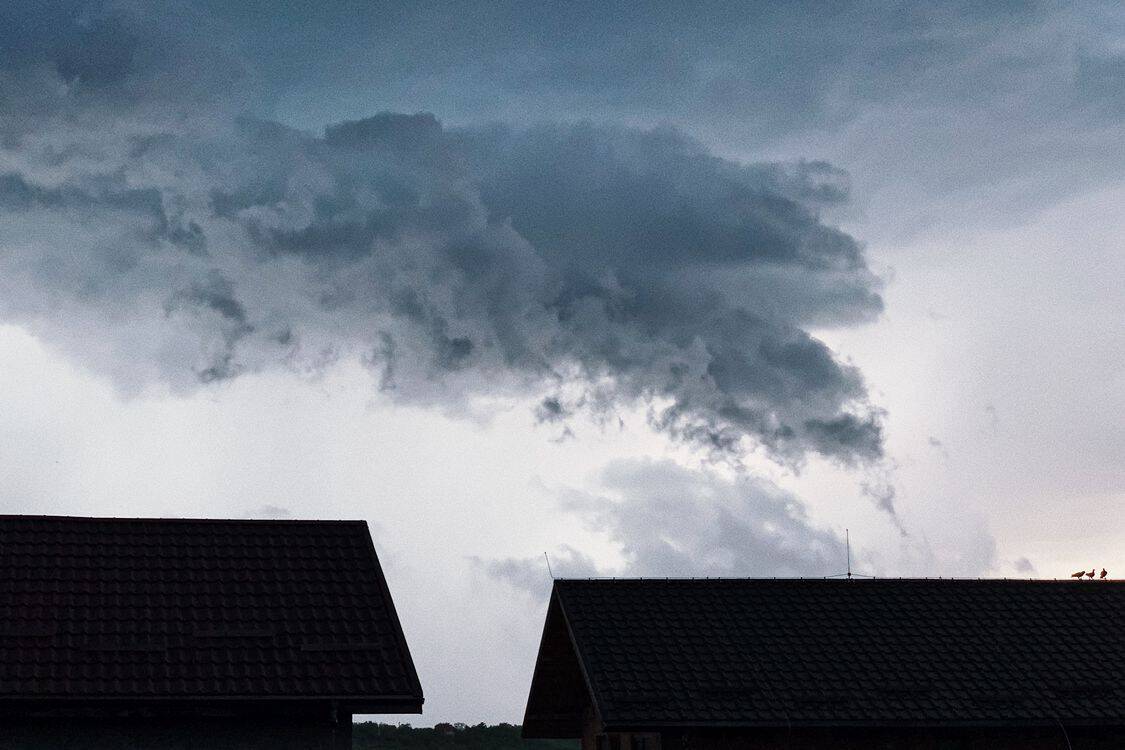
Major hailstorms can create a sudden jump in roofing workload, which is why workforce capacity matters so much in Central Texas. Statewide hail data shows the scale of the demand shock even though hiring decisions happen company by company.
Texas’s repeated hail exposure gives roofing companies a reason to plan for surge capacity even though the exact timing and location of the next storm are unpredictable.
Texas Sees Far More Hail Events Than Any Other State, and It Isn’t Close
According to insurance industry tracking, Texas experienced 902 major hail events in a recent year, far outpacing Illinois, the second-ranked state, which recorded 375. That gap shows how concentrated hail risk is in Texas compared to the rest of the country.
Central Texas is highly exposed to severe hail, but labels such as ‘hail alley’ should be treated as descriptive shorthand rather than a precise official boundary.
Spring is the season most associated with severe hail in Central Texas, when warm, moist air from the Gulf collides with drier air moving in from the west. That collision produces the supercell thunderstorms capable of generating the large, damaging hail that drives most roofing insurance claims in the region.
Claims data from major insurers backs up the pattern. In a recent year, one national insurer alone processed over 95,000 hail-related claims in Texas, with an average payout near $15,000 per claim, and that’s just one carrier’s share of the statewide market.
The statewide claims totals illustrate the scale of storm-related work without requiring an extrapolated estimate for every insurer or every Austin neighborhood.
Austin’s growth over the past decade has only sharpened the effect. More rooftops means more exposure to any given hailstorm, so as the metro area has added housing stock, the dollar value of storm-related roofing demand generated by each major weather event has grown right along with it.
Storm Damage Creates a Workload Spike That Baseline Staffing May Not Absorb

A roofing company normally staffs for its ongoing mix of repairs, replacements, inspections, and other work. A widespread storm can compress additional demand into a much shorter window.
Insurance claims can add urgency because damaged roofs may need temporary protection and homeowners often want an inspection soon after the event.
That creates a workforce-planning problem: companies need enough trained capacity to respond without sacrificing safety or installation quality. That is why Austin roofing companies benefit from trained surge capacity rather than trying to build a crew from scratch after the hail falls.
Why Post-Storm Capacity Planning Is Different From Ordinary Seasonal Hiring
Post-storm hiring in roofing differs from ordinary seasonal retail or landscaping hiring because the work itself is more specialized. Storm-damage repair often involves insurance documentation, matching existing materials, and coordinating with adjusters, on top of the physical roofing work.
That specialization narrows the pool of workers a company can bring on quickly during a surge. Experienced roofers who understand both the physical trade and the claims process become more valuable during storm season than during quieter months, which changes what companies look for when hiring in the weeks after a major weather event.
Texas’s recurring spring and early-summer severe weather gives companies a general planning window, but no contractor can predict the exact neighborhood or week that will generate the next surge.
Building capacity before storm season can reduce the scramble afterward, whether that means retaining experienced crews, training employees, or maintaining vetted subcontractor relationships.
Training is valuable before a surge because the highest-demand period is the worst time to teach basic safety and installation procedures from scratch.
Outside labor can help absorb overflow, but contractors still need quality-control systems to make sure temporary capacity meets the same standards as the core workforce.
For Austin, the useful takeaway is not a documented annual hiring spike; it is that storm-driven demand makes flexible, trained workforce capacity unusually important.