

Emergency department staff in Cincinnati, like their counterparts across the country, have learned to recognize a specific kind of patient. Someone arrives clutching a jaw, unable to sleep, occasionally unable to think through the pain. There is no broken bone, no chest pain, no obvious trauma. The problem is a tooth. And in most cases, the emergency room cannot fix it.
This is one of the stranger inefficiencies in American health care. A patient in genuine distress goes to the place that is always open and obligated to see them, and the place does roughly the one thing it is least equipped to do for that particular problem. The visit is not useless, but it is almost always incomplete, and the gap between what the ER can do and what the patient actually needs is where the whole problem lives.
What an ER Can and Can’t Do for a Tooth
Hospital emergency departments are built for triage and stabilization. For a dental emergency, that means managing pain and, when there is an infection, prescribing antibiotics. What they generally cannot do is treat the source. Most ERs do not have a dentist on staff, the equipment for definitive dental work, or the mandate to perform it. They can take the edge off; they cannot drill, fill, extract, or perform a root canal.
So the typical encounter goes like this: the patient is assessed, given something for the pain, possibly handed a prescription, and sent home with advice to follow up with a dentist. The infection or decay that caused the crisis is still there. The relief is temporary by design. And because the underlying problem was never addressed, the odds that the same patient returns are high. It is a loop that burns money and resolves nothing.
The cost side of this is not small. Treating dental problems in the emergency department is far more expensive than treating them in a dental office. National figures from the American Dental Association put the price of a dental ER visit at roughly three times that of a dental visit, averaging about $749 when the patient is not admitted. Multiply that across the roughly two million dental-related ER visits the country sees each year, and the waste becomes a public-health-scale problem, much of it falling on Medicaid.
How a Cavity Becomes a 2 a.m. Crisis
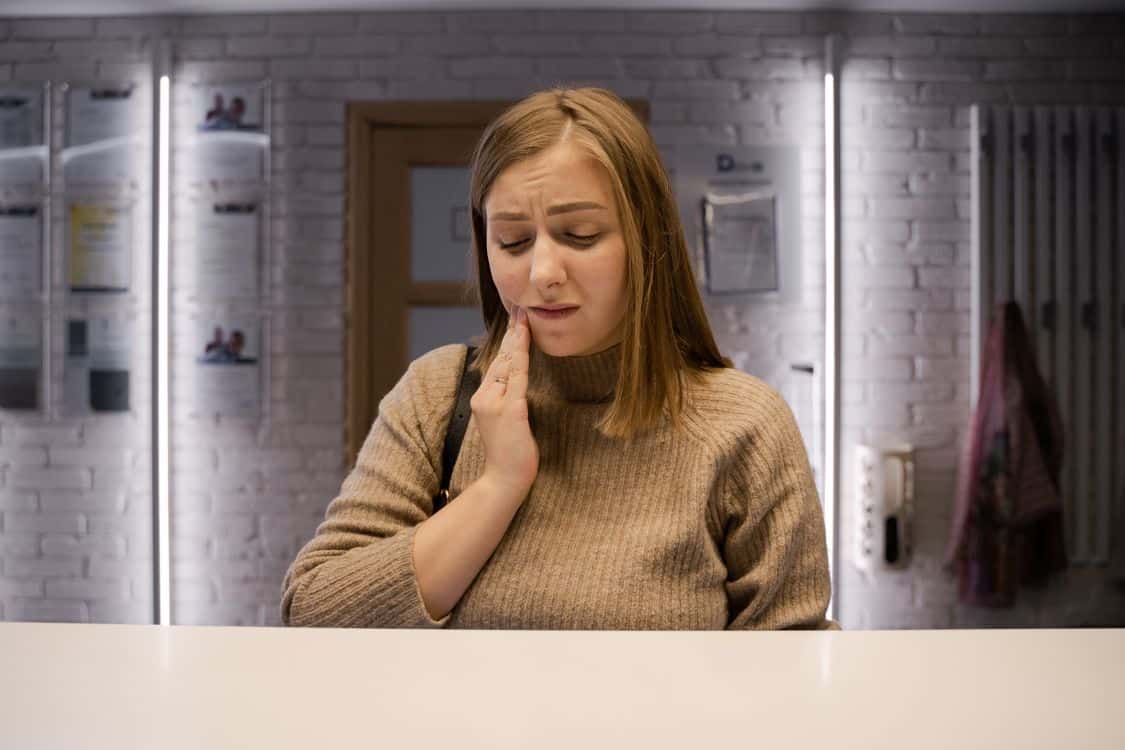
No one plans to treat a toothache in an emergency room. People end up there because of a sequence of smaller failures that converge at the worst possible hour. A cavity goes untreated because a dental visit is too expensive, or the nearest participating dentist is booked for weeks, or the patient simply cannot get time off during business hours. The decay deepens. It reaches the nerve. An abscess forms.
By the time the pain becomes unbearable, the cheap early fix is long gone, and the timing is rarely convenient. Dental emergencies have a way of peaking at night and on weekends, precisely when routine dental offices are closed. The patient is left to choose among bad options, and the emergency room is the one that is unmistakably open. It is a rational choice inside a system that offers very few alternatives at that hour.
This is the part worth saying clearly: ending up in the ER with a toothache is not a sign of poor judgment. It is the predictable result of a care system that does not offer urgent dental treatment when urgent dental problems actually happen. People go where the door is open.
The Setting Is the Problem
The deeper issue is not the patient or even the emergency department. It is the mismatch between where dental emergencies are sent and where they can actually be solved. An untreated dental infection is not a problem that stays politely in the mouth. It can spread and, in serious cases, become dangerous. Sending it to a setting that can only manage symptoms means the clock keeps running on a condition that needed definitive treatment.
The alternative is straightforward in concept: dental emergencies belong with a dentist who can treat the source, ideally one reachable when the pain strikes rather than weeks later. An after-hours or urgent dental option does the thing the emergency room structurally cannot, which is fix the tooth. That redirection is exactly what public-health programs have been trying to encourage, because it costs less and, more importantly, it actually ends the cycle.
The federal data underscores how routine this has become. The CDC has reported on the order of two million emergency-room visits a year for dental problems, and an older analysis found that abscesses and ordinary tooth decay, both highly preventable, accounted for the large majority of dental ER visits. The country also loses tens of millions of work and school hours each year to unplanned dental care. These are not edge cases. They are a standing feature of a system in which the urgent dental door and the open door are rarely the same door. And because the visits resolve so little, a large share of them are effectively repeat business: the same preventable conditions, in the same patients, cycling back through the same expensive setting because nothing in between ever changed.
Until urgent dental care is easy to find at the hours people need it, Cincinnati emergency rooms will keep seeing teeth they cannot fix, patients will keep cycling back, and a fundamentally treatable problem will keep being handled in the one setting built to do everything except treat it.