
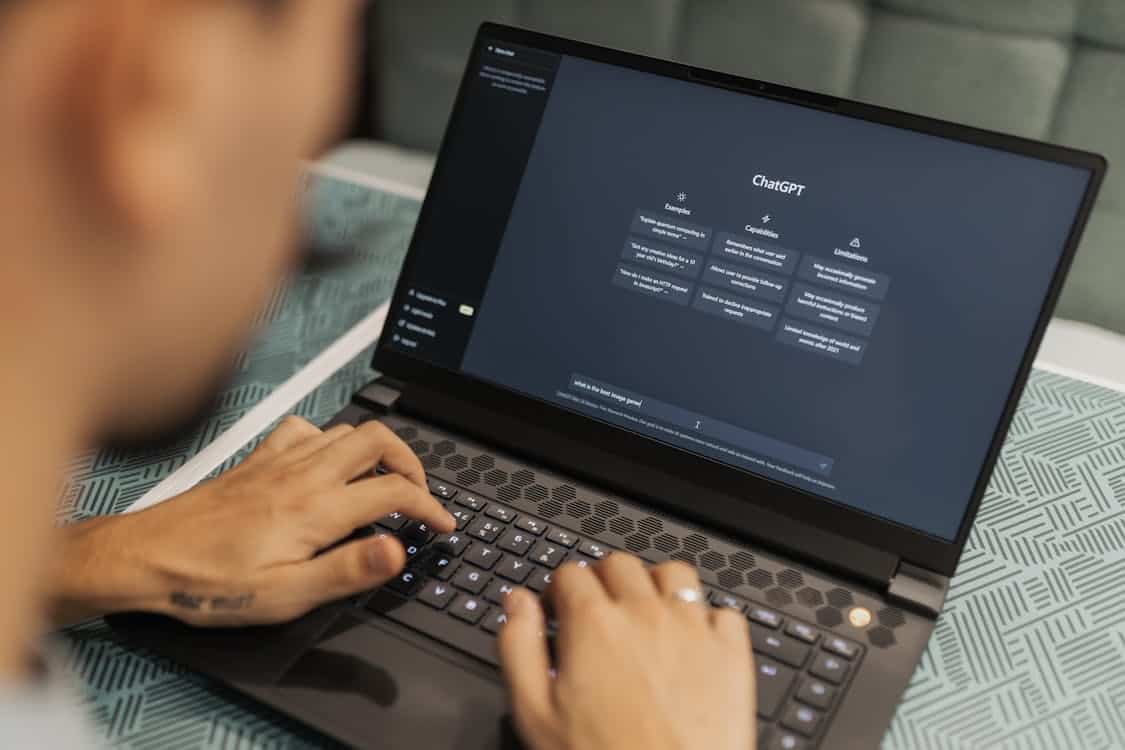
When ChatGPT launched in November 2022, school districts across the country responded with bans. Teachers panicked about essay mills becoming obsolete, administrators warned about academic integrity collapse, and education technology conferences filled with sessions on detecting AI-generated text. The consensus was clear: generative AI represented an existential threat to learning. By 2026, that consensus looks increasingly wrong.
Meta-Analysis Shows Moderate Positive Effects
A meta-analysis published in March 2026, examining 35 experimental studies involving 4,193 participants, found that ChatGPT had a moderately positive effect on student learning outcomes, with a Hedges’ g of 0.670 – a statistically significant improvement in both cognitive and non-cognitive skills. The findings suggest that when integrated properly into educational settings, AI tools can enhance rather than undermine learning.
The key phrase is “when integrated properly.” The panic wasn’t entirely misplaced; the tool absolutely can be misused. Students can and do submit AI-generated essays as their own work. But the binary framing – ban it or watch education crumble – missed a third option: teach students to use it as a learning tool rather than a replacement for learning.
How Students Actually Use ChatGPT
Research examining what students actually gained from it reveals patterns that complicate the cheating narrative. Students primarily use ChatGPT for brainstorming, summarization, and research assistance. They find it effective for simplifying complex information and generating ideas, but less reliable for factual accuracy and direct classroom learning – a distinction that suggests many students are using it as a study partner rather than an academic surrogate.
Programming courses provide particularly clear evidence. A study examining Nigerian higher education found that students using ChatGPT for programming assistance showed improved final scores compared to control groups, with qualitative feedback indicating that immediate assistance on complex topics reduced frustration and enhanced learning experience. Critically, the students weren’t having ChatGPT write their code – they were using it to understand concepts, debug errors, and explore alternative approaches.
Context Matters: Duration, Subject, and Structure
The moderating variables tell a more nuanced story about when and how AI assistance works. Subject matter matters: ChatGPT showed stronger effects in some disciplines than others. Experimental duration matters: benefits were most pronounced when tools were used consistently for four to eight weeks, suggesting that superficial one-off usage doesn’t produce learning gains. Instructional mode matters: structured educational settings, particularly problem-based learning environments, yielded better outcomes than unstructured use.
That last finding is critical for understanding why early panic was both understandable and misguided. Unstructured access to a powerful tool that can produce coherent text on demand is indeed an academic integrity nightmare. But structured integration – where ChatGPT is explicitly part of the pedagogical design, with clear guidelines for appropriate use – can enhance learning without compromising integrity.
A Major Retraction Exposes Research Quality Issues
The controversy took a dramatic turn in late April 2026 when Springer Nature retracted a widely-cited 2025 meta-analysis that had claimed even larger positive effects. The retracted paper, which had been cited 504 times and read by nearly 500,000 people, contained methodological discrepancies that undermined confidence in its conclusions. The retraction notice, posted in April 2026, acknowledged that certain analytical issues couldn’t be verified.
The retraction highlights a deeper problem with the AI-in-education research landscape: it’s moving faster than peer review can reliably validate. Studies published in 2023 and 2024 were examining a technology that was itself evolving month-to-month. ChatGPT’s capabilities in January 2023 differed meaningfully from its capabilities in January 2024, yet studies from both periods get aggregated into meta-analyses as if measuring the same intervention.
Multiple Studies Confirm Similar Conclusions

Despite the retraction, multiple independent meta-analyses using different methodologies have reached similar conclusions about moderate positive effects. A separate June 2026 meta-analysis examining 66 studies found a large positive effect (Hedges’ g = 1.14) on undergraduate learning outcomes, though this finding too will require scrutiny given the methodological challenges in the field.
What’s particularly interesting is the gap between student perceptions and measured outcomes. Students report high levels of engagement and motivation when using ChatGPT, but professors highlight concerns about impacts on critical thinking, interpersonal communication, and decision-making skills. This divergence suggests that while AI tools may make learning feel better – more accessible, less frustrating, more responsive – the long-term cognitive effects remain uncertain.
The Accessibility Argument
The accessibility dimension deserves more attention than it typically receives. AI tools can support students with disabilities, providing assistance with spelling and grammar for dyslexic students or helping English language learners improve writing through instant feedback. In this context, ChatGPT functions similarly to assistive technologies that have long been considered legitimate educational accommodations rather than “cheating.”
From Bans to Integration
By 2026, many districts that initially banned ChatGPT have quietly reversed course, shifting from prohibition to integration. The new approach typically involves explicit instruction on how to use AI tools appropriately: for brainstorming, not final drafts; for understanding concepts, not avoiding reading; for checking work, not producing work. Students learn to cite AI assistance the way they cite human tutors or research sources.
The economic reality also forced reconsideration. One-on-one tutoring is highly effective but inaccessible to most students due to cost. ChatGPT provides something approximating personalized instruction at scale, particularly in resource-limited schools where teacher-to-student ratios make individualized attention difficult. It’s not as good as a skilled human tutor, but it’s dramatically better than no support at all.
The Skill Development Question Remains
The harder question is what happens to skill development when students grow accustomed to AI assistance. If a student never struggles through the frustration of debugging code independently because ChatGPT is always available to explain the error, do they develop the problem-solving resilience that defines competent programmers? If they never wrestle with organizing an argument because AI can instantly generate a coherent outline, do they internalize the thinking skills that make for strong writers?
These concerns are legitimate but not categorically different from long-standing debates about calculators in math education or spell-check in writing instruction. The technology changes what skills need intensive development versus what skills can be delegated to tools. The challenge is distinguishing between skills that genuinely don’t need human mastery anymore and skills where tool-dependency creates dangerous gaps.
Finding the Right Balance
What the 2026 research makes clear is that the “ban it or embrace it” framework was never the right question. The right question is: under what conditions, with what scaffolding, for which tasks, and with what explicit instruction does AI assistance enhance learning without creating cognitive dependency? The answer appears to be: structured integration, appropriate duration, clear use guidelines, and pedagogical designs that treat AI as one tool among many rather than a replacement for thinking.
The cheating panic wasn’t completely wrong – the risks are real. But the emerging evidence suggests the opportunities are real too. Getting the balance right requires more sophistication than blanket bans or uncritical enthusiasm. It requires treating AI tools the way education has always treated powerful tools: with careful attention to when they help and when they harm.